
La Liga
China Expands Its Space Station: A New Era of Exploration | evolution gaming live casino, sapporo88 login
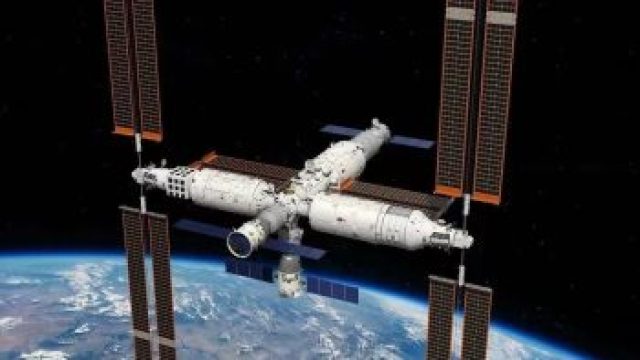
As global interest in space exploration intensifies, China is making significant strides with its state-of-the-art space station. Currently in a T-shaped configuration, the station is set for an expansion that will transform it into a cross-shaped facility, marking a new chapter in China's ambitions in outer space. With the recent report from China Media Group highlighting this expansion, let's dive into what this means for the future of space exploration.
Current Structure of the Space Station
China's space station, officially known as Tiangong, consists of three primary components: the Tianhe core module, the Wentian lab module, and the Mengtian lab module. These modules work together to provide a versatile platform for various scientific experiments and international collaboration in space research.
The Tianhe Module
The Tianhe core module serves as the heart of the space station, providing essential living and working spaces for astronauts. This module is critical for the station's operations, enabling long-term missions and scientific research.
The Wentian and Mengtian Lab Modules
The Wentian and Mengtian lab modules, attached to the Tianhe core, enhance the station's capabilities significantly. They are equipped with advanced research facilities that allow for innovative experiments in various scientific fields, such as biology, materials science, and human health.
Upcoming Expansion Details
The planned expansion involves adding a new module that will not only increase the station's size but also enhance its functionality. This new module is designed to provide additional research capabilities and living space, thereby accommodating more astronauts and research activities.
Why This Expansion Matters Now
With the ongoing race for space exploration, this expansion is crucial for several reasons:
- International Collaboration: The expansion can foster greater international partnerships in space research, paving the way for collaborative missions.
- Scientific Advancements: A larger and more capable space station allows for more extensive experiments, potentially leading to breakthroughs in various scientific fields.
- Strategic Positioning: As nations vie for dominance in space, China's expansion signals its commitment to becoming a leading space power.
Impacts on Scientific Community
The upgraded space station will serve as a unique platform for researchers worldwide. With its enhanced capabilities, the Tiangong station will provide opportunities for nations to contribute to and benefit from cutting-edge scientific research.
Potential Areas of Research
Researchers can explore various scientific fields aboard the expanded space station, including:
- Astronomy: Observing cosmic phenomena from a more stable and advanced platform.
- Earth Sciences: Conducting experiments that can help understand climate change and natural disasters.
- Life Sciences: Studying the effects of long-term space travel on human health.
Conclusion: A Leap Towards the Future
The expansion of China's space station is not just a significant milestone for the country but also a step forward for global space exploration. As the station evolves, it will create new opportunities for scientific discoveries and international cooperation. The advancements made in this arena will undoubtedly influence future missions and the direction of humanity's exploration of space.
In a rapidly changing world, keeping an eye on developments like this is essential for understanding the future of technology and science. Stay informed and follow the journey of China's expanding space station as it unfolds!
