
Premier League
Norway's Viking Celebration: A Spotlight on Regional Rivalries | hb 88 slot, rtp captain77, bosplay77
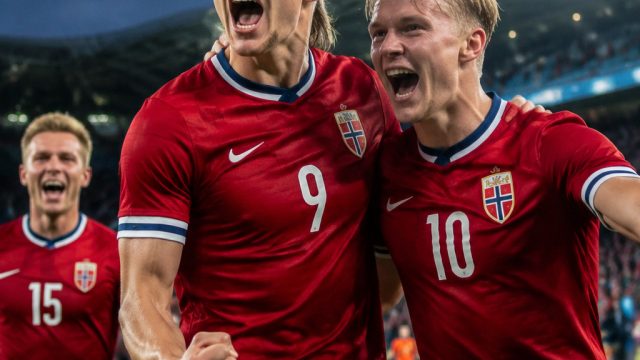
In an era where sports unite nations and fans, Norway's recent World Cup celebration has ignited a wave of discussions across Scandinavia. The 'Viking row' event, which commemorated the success of Norway’s national team, has not only captured the imagination of many but also raised eyebrows among its Nordic neighbors. Understanding the cultural context of this celebration is essential to grasp the current dynamics at play.
What is the 'Viking Row' Celebration?
The 'Viking row' is a unique and spirited celebration that originated as a tribute to Norway's rich maritime history and its Viking ancestors. As part of the World Cup festivities, Norwegian fans took to the streets, draping themselves in traditional Viking attire and rowing symbolic boats to showcase their support for the national soccer team. This event has gained traction on social media, with videos and images showcasing the vibrant atmosphere surrounding the celebrations.
Cultural Roots and Modern Adaptation
Norway's Viking heritage is a source of immense pride for many citizens, and the celebration reflects a blend of historical homage and modern sports culture. The enthusiastic participation in the 'Viking row' aligns with Norway's broader narrative of resilience and teamwork, encapsulating the spirit of unity amongst fans. However, it poses questions about cultural appropriation and the implications of such displays in a regional context.
Regional Reactions: A Divided Response
While many Norwegians celebrated this event as a demonstration of national pride, other Scandinavian nations viewed it through a different lens. Some felt that the Viking row was a blatant oversimplification of a shared heritage, with concerns about misrepresentation and appropriation of Viking culture. This reaction underscores the complexity of regional identities in Scandinavia, where historical ties often intertwine with modern national narratives.
Neighboring Nations’ Concerns
- Sweden: Some Swedish commentators expressed frustration, suggesting that Norway's display diminishes the collective Viking heritage shared among all Scandinavian countries.
- Denmark: Danish citizens echoed similar sentiments, indicating that while celebrations are essential, they should honor the shared history rather than create a sense of rivalry.
- Finland: Finnish observers pointed out that such events might risk fostering unnecessary tensions among neighboring countries that have long-standing friendly relations.
The Impact of Social Media on Cultural Celebrations
The rise of social media platforms has played a pivotal role in amplifying the reach and visibility of cultural events like the 'Viking row.' With hashtags trending and viral videos capturing the enthusiasm of fans, these digital spaces have become vital for expressing national pride. Simultaneously, they serve as platforms for criticism and debate, allowing for diverse perspectives on what national celebrations should represent.
Influencer Culture and Sports Celebrations
As influencers and public figures share their takes on the Viking celebration, the discussion expands beyond mere cultural nostalgia. The convergence of sports, culture, and social media makes the 'Viking row' a fascinating case study of modern celebrations. Influencers have the power to either bolster national pride or question the motivations behind such displays, thereby shaping public perception.
Conclusion: Embracing Shared Heritage with Respect
Norway's 'Viking row' celebration has sparked an important dialogue about the significance of cultural events in a multicultural landscape. While celebrating national achievements is commendable, it is crucial to navigate the fine line between honoring heritage and fostering regional tensions. As Scandinavian nations continue to evolve, finding common ground that respects shared histories will be essential in fostering unity rather than division. The celebration may have sparked debate, but it also serves as a reminder of the rich tapestry of culture shared among the Nordics. By embracing this shared heritage with respect, countries can build a more cohesive and collaborative future in sports and beyond.
